Mobility · 5 min read
Mobility vs flexibility: what is the difference?
Understand flexibility, active range and usable mobility, with practical ways to explore range and build control without forcing a stretch.
What is the difference between mobility and flexibility?
| Idea | In practice |
|---|---|
| Flexibility | The available range around a joint, often explored with a stretch or support. For example, reaching a comfortable supported position. |
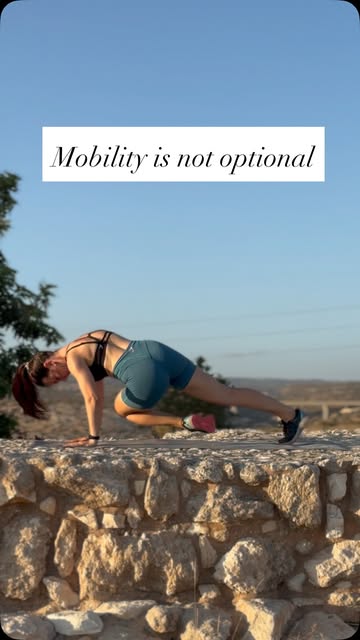
| Active range | Range you can move through using your own effort. For example, moving the knees during a supported hip switch. |
| Usable mobility | Mari’s practical shorthand for range plus the control to use it in a task. For example, using ankle movement while stepping or squatting. |
These terms overlap. “Usable mobility” is a teaching framework here, not a clinical test or a universally agreed measurement.
Range is only the first question
If you can reach a position passively but cannot move into it with control, that range may not yet feel useful in a lunge, overhead reach or change of direction. This is why Mari frames mobility as usable range rather than a contest to reach the furthest point.
The goal is not to make every joint move as far as possible. It is to explore the range your activity asks for, then build enough control to use it comfortably and repeatedly.
A practical way to train it
Start with a slow movement that lets you notice the available range. Reduce the speed or range until you can keep the movement smooth. Then add a pause, light resistance or a more active version when that feels appropriate.
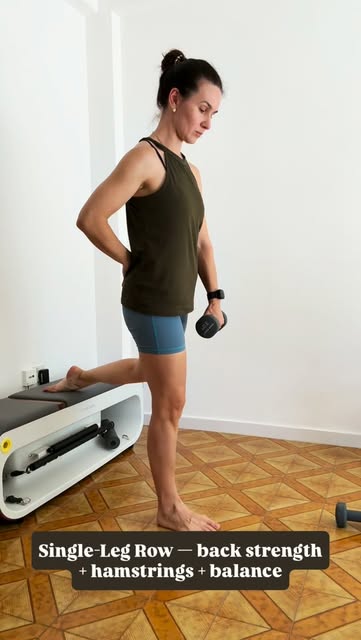
For example, a supported hip rotation can become an unsupported switch; an ankle rock can become part of a split squat; a shoulder slide can become an overhead reach under light load. The useful progression is the one you can control, not simply the hardest variation.
What not to chase
More sensation is not automatically more progress. Forcing a stretch, bouncing into an end position or treating every stiff day as a problem to fix can make the practice less useful. Use a tolerable range and judge the movement across several sessions, not one dramatic attempt.
Source notes
The sources support the general principles discussed here. The movement examples are educational options from Mari PhysioFit’s routine, not protocols tested or endorsed by those sources.