Mobility · 4 min read
90/90 hip switches: a supported starting point
A practical guide to exploring seated hip rotation, using hand support, a smaller range and a pace you can control.
What are 90/90 hip switches?
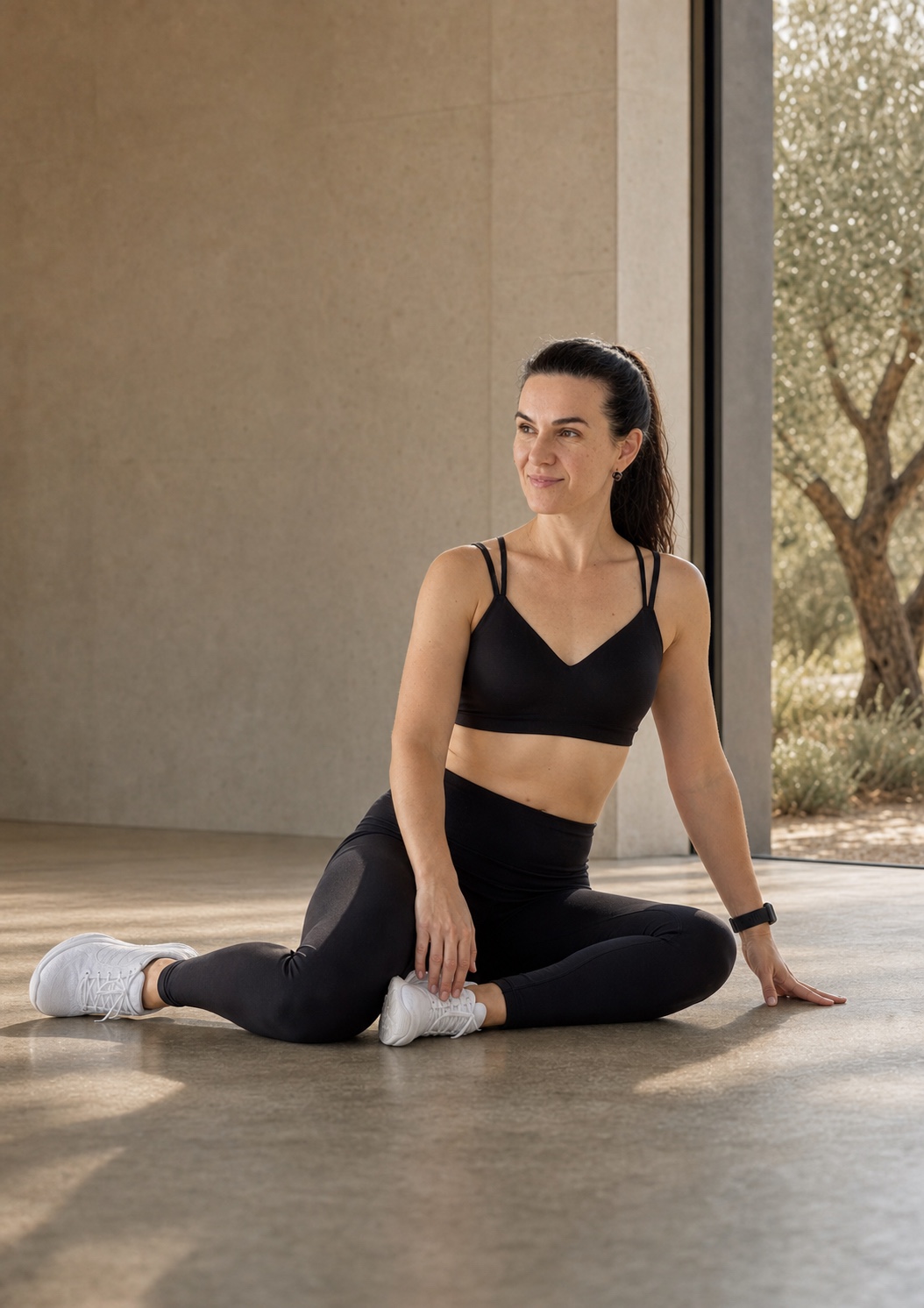
A hip switch is a seated movement in which bent knees travel from one side to the other as the hips rotate. The name describes a familiar bent-knee position, rather than an angle you must measure or force. In Mari’s routine, the purpose is to explore hip rotation with control.
Reaching a shape and moving into it are different tasks. You may use your hands throughout, move one side at a time or stop before the knees reach the floor. A smaller smooth transition is a reasonable place to begin.
How do you begin with support?
Sit on a comfortable surface with both knees bent and the feet in front of you. Place your hands behind you where they give steady support. Keep your chest comfortably lifted without trying to hold a rigid posture.
Let the knees travel slowly to one side, then back through the middle and toward the other side. Keep the movement unhurried. The published starter suggests 6–8 controlled switches as a starting option, with rest whenever needed. That is a guide, not a target to finish through symptoms.
What can you change if the position feels demanding?
Reduce the distance the knees travel and let the hands take more support. Adjust the position of the feet until you can move comfortably. You can practise only part of the transition rather than holding an end position.
Knee discomfort is a reason to modify or stop, not something to work around by pushing harder. If getting down to or up from the floor is difficult, choose another suitable movement or seek individual guidance rather than copying the floor position.
How can you make the same movement more active?
Once the supported version feels repeatable, you can experiment with lighter hand support or a gentle forward reach. Change one feature at a time so you can notice whether the transition stays smooth.
You do not need to progress on a schedule. Keeping support, using a shorter range or returning to a simpler version on a different day are all ways to adapt the same practice.
Where does it fit in a routine?
Hip switches are one of the five movements in Mobility Starter. You can use the full routine as a short movement check-in, or keep a movement that fits your day. A hip switch alone does not replace strength training, aerobic activity or preparation for a particular sport.
Notice the movement you can repeat comfortably rather than comparing one hip with a photograph. Differences between sides do not, on their own, establish a diagnosis or a need for correction.
Source notes
The sources support the general principles discussed here. The movement examples are educational options from Mari PhysioFit’s routine, not protocols tested or endorsed by those sources.