Mobility · 4 min read
Mobility before training: how it fits into a warm-up
Use mobility as one part of preparation, then build toward the movements, pace and loads your training session asks for.
Is mobility the same as a warm-up?
They overlap, but the words describe different jobs. Mobility practice explores available range and how you control it. A warm-up prepares you for the activity you are about to do, including its pace, coordination and loading.
The NHS warm-up example starts with general movement such as marching and includes knee lifts, shoulder rolls and knee bends. The useful principle is to begin at an accessible level and build toward what comes next. It is not a requirement to copy exactly the same sequence before every sport.
How do you choose relevant mobility movements?
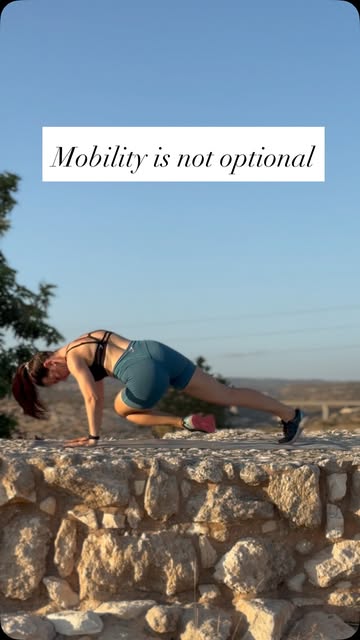
Start with what your session asks you to do. An ankle rock may be a way to rehearse the shin moving forward over the foot before squatting. A supported hip switch may let you explore hip rotation before a session with varied lower-body positions.
Use a range and pace that feel comfortable. The aim here is to become familiar with the movements, not to exhaust yourself or force a new end position just before training. No single drill is essential for every person or activity.
What comes after the mobility part?
Move toward the actual activity. Before strength work, that can mean practising the planned movement with an easy load and increasing it gradually as appropriate. Before an active game or run, it can mean an easy start followed by practice closer to the movements and pace you expect.
The amount and type of preparation depend on the activity, your experience and the conditions. A few movements from a guide cannot determine readiness for maximal or unfamiliar effort, and a warm-up cannot guarantee an injury-free session.
Where does stretching fit?
Stretching is one option for exploring range. A 2025 expert consensus supports stretching for range-of-motion gains but treats its purpose and context as important. It advises against prolonged static stretching immediately before maximal or explosive contractions in the stretched muscles.
That does not mean all stretching is harmful before exercise. Shorter stretches and dynamic movement can be included within broader preparation. Choose the approach for the task rather than turning a single stretching rule into a universal ban.
Can you still use Mobility Starter on its own?
Yes. The guide is also a short, standalone movement check-in for a quiet morning, after a walk or between periods of sitting. Its five movements and supported options do not have to become a warm-up for a workout.
Choose the Longevity, Life & Sport or Reset edition according to why you want to begin. The three published editions share the same routine and provide different starting contexts.
Source notes
The sources support the general principles discussed here. The movement examples are educational options from Mari PhysioFit’s routine, not protocols tested or endorsed by those sources.