Mobility · 4 min read
The half-kneeling ankle rock: heel down, comfortable range
Explore ankle movement with a supported knee-forward rock, clear starting options and useful ways to adjust the movement.
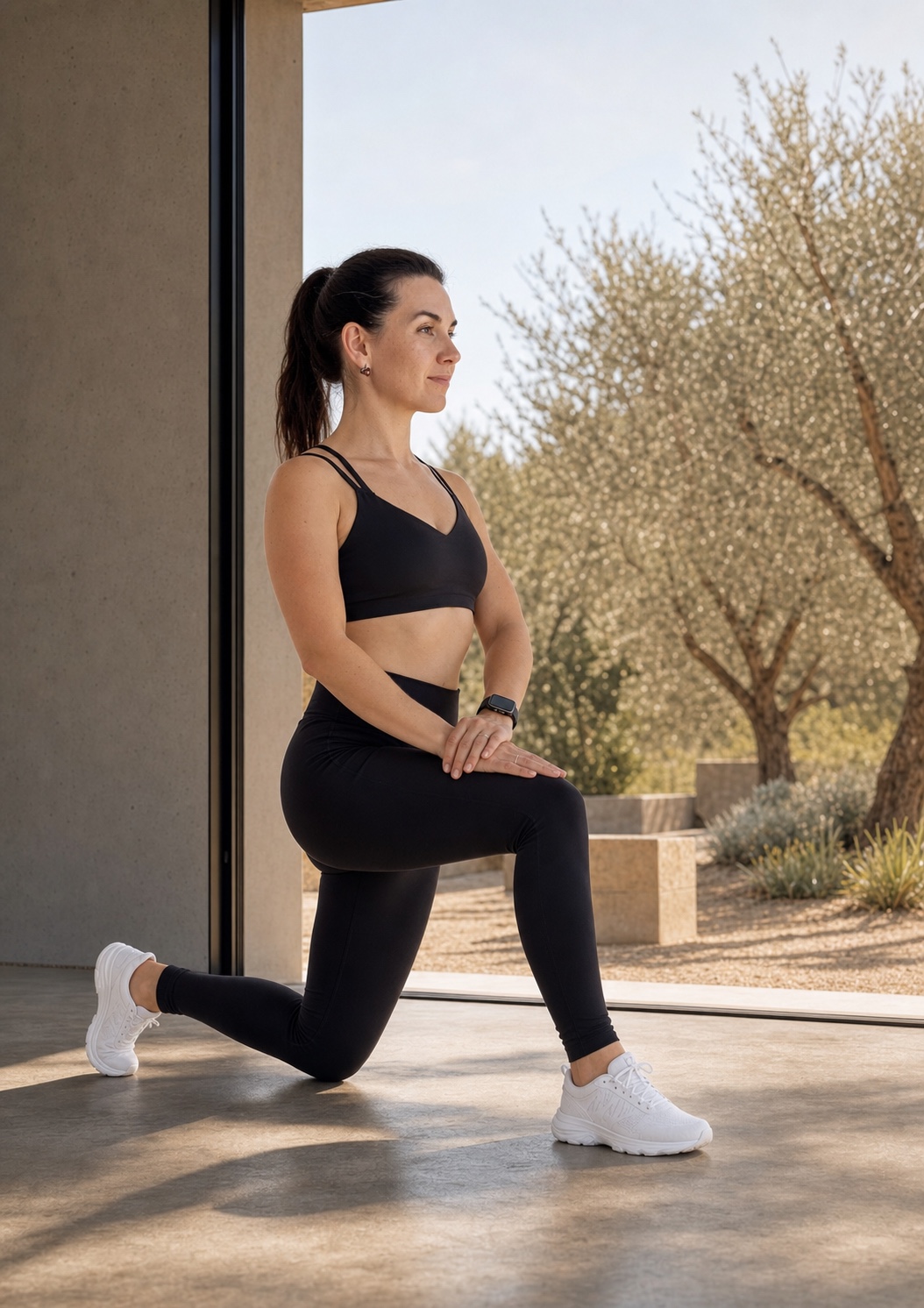
What does the ankle rock explore?
The movement explores how the shin travels forward over the foot while the heel stays down. This direction appears in activities such as stepping, squatting and lunging, although each activity has other demands too.
The exercise is a way to practise a movement, not a test that tells you whether your ankle is healthy. A short range, a difference between sides or an unfamiliar sensation does not identify a cause on its own.
How do you set it up?
Use a comfortable surface and pad the kneeling knee if helpful. Put the other foot in front of you and use a stable wall or chair for balance. Choose a foot position that lets you keep the front heel resting on the floor.
Guide the front knee forward over the middle toes and return slowly. Stay within a comfortable range and avoid bouncing at the end. The published starter offers 6–8 repetitions on each side as a starting option; use fewer or take a break when appropriate.
What if the heel lifts or kneeling is uncomfortable?
Bring the movement back to the point where the heel can stay down without strain. More hand support or a shorter forward rock can make the task easier to control. You do not need to push harder to reach a wall or another fixed marker.
If kneeling remains uncomfortable even with padding, leave this version out and choose a suitable alternative with individual guidance if needed. The rest of a movement session does not depend on completing every exercise.
How do you build on it?
A brief pause at the furthest comfortable point is one option from the guide. Keep the return just as controlled as the forward movement. Let a comfortable, repeatable movement guide the choice rather than a distance target.
Over time, you may explore this knee-forward action in other activities you already practise. A deeper squat or lunge also depends on strength, balance, technique and the demands of the task; an ankle drill is only one part of that picture.
Can it be part of a warm-up?
It can be an optional movement rehearsal before an activity that uses similar ankle range. Follow it with the broader preparation your session needs, such as easy movement and progressively more specific practice.
It can also be part of the standalone Mobility Starter check-in. You do not have to turn every movement into a performance test or a promise about preventing injury.
Source notes
The sources support the general principles discussed here. The movement examples are educational options from Mari PhysioFit’s routine, not protocols tested or endorsed by those sources.